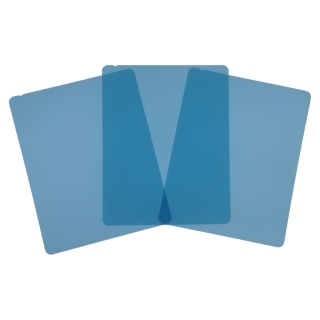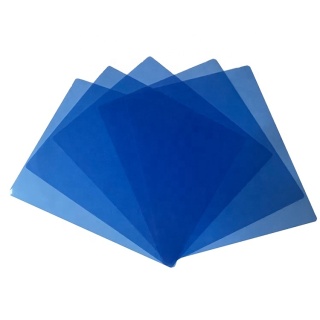

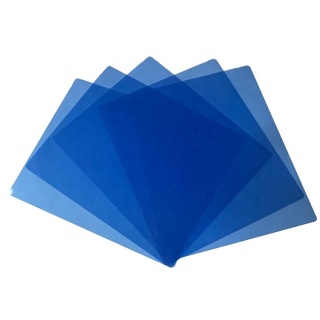
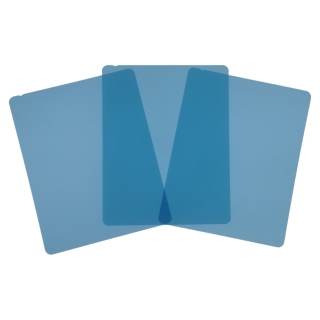
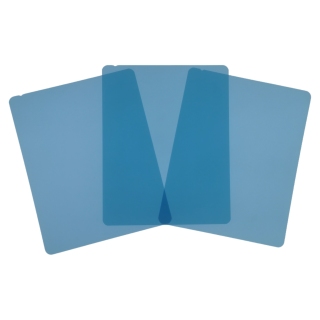
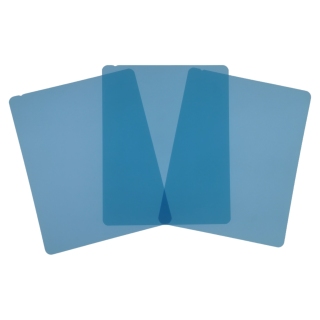
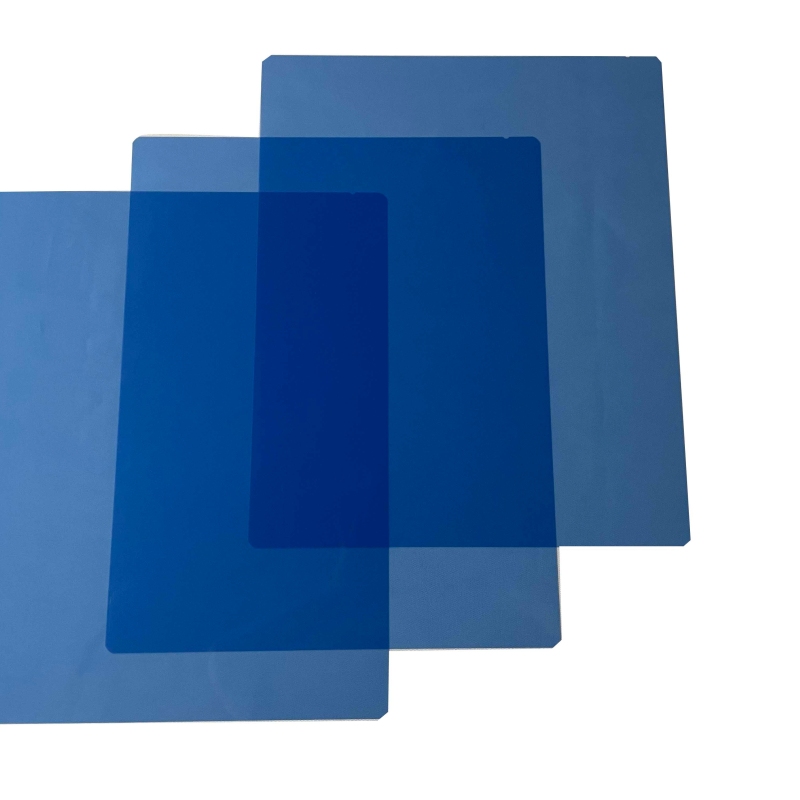
Medical Inkjet Film for Inkjet Printer
The image is clear and bright, easy to operate in a well-lit environment, simple and convenient to use, with low cost, and suitable for use in various markets.
Inkjet Ink: Must possess biocompatibility, low volatility (VOC), water resistance and fade resistance. Color ink must comply with the DICOM 3.0 medical imaging color standard, while black and white ink must achieve 16-bit grayscale reproduction (65,536 levels);
Film Coating: Adopts laser toner coating or inkjet-specific adsorption coating, featuring low haze (≤1.2%), high ink absorption rate (≤0.5 seconds), antistatic properties, etc., to ensure rapid ink curing without diffusion;
Substrate Material: Uses medical-grade PET (polyester) as the core substrate, with a thickness range of 125-210 microns and a grammage of 175-252 gsm. It has high light transmittance (≥92%), tear resistance, acid and alkali corrosion resistance and other characteristics, supporting long-term archiving (5-10 years at room temperature).
By Application:
Diagnostic-grade film: Used for clinical diagnosis (e.g., CT, MRI images), requiring NMPA Class III medical device certification with resolution ≥2400 dpi;
Teaching/Archiving-grade film: Used for medical education and case archiving, meeting Class II medical device certification with resolution ≥1200 dpi;
Color film: Adapted for color ultrasound and 3D reconstruction images, supporting RGB full-color gamut output with color reproduction accuracy ≥95%.
By Substrate Thickness:
Thin type (125-150μm): Suitable for portable devices and self-service printers, featuring high flexibility;
Medium thickness (180μm): Universal type, balancing clarity and durability;
Thick type (210μm): Used for long-term archiving and high-frequency reference scenarios, with strong wear resistance.
By Imaging Characteristics:
Black and white inkjet film: Focuses on high contrast (≥3.5), adapted for grayscale images such as X-ray and DR;
Color inkjet film: Emphasizes color accuracy, supporting the output of pathological sections and ultrasound color images.
High-Precision Imaging: Through specialized coating and ink formulations, it achieves clear presentation of micro-lesions (e.g., nodules below 1mm) with no distortion when magnified 200%. The diagnostic accuracy is 15%-20% higher than that of traditional film;
Cost-Effectiveness and Environmental Friendliness: The printing cost per square meter is 40%-60% lower than that of silver halide film and 20%-30% lower than that of laser film. It has no silver ion pollution or chemical developing waste liquid, complying with the EU REACH environmental standard;
Strong Compatibility: Compatible with mainstream inkjet printers (e.g., Canon iX6780, Epson 4910, HP medical-specific models), supporting borderless printing in multiple formats such as A3+ and A4, and seamlessly integrating with PACS (Picture Archiving and Communication Systems);
Easy Storage and Operation: No special storage environment required (10-30℃, relative humidity 30%-65% is sufficient). It is antistatic and anti-adhesive, drying immediately after printing without the need for developing and fixing processes;
Multi-Functional Adaptability: Supports black and white/color, 2D/3D image output, and can integrate text reports with image printing, meeting the diversified needs of hospital self-service printing and teleconsultation.
Hospital Clinical Diagnosis:
Radiology Department: Output of CT, MRI, X-ray, DR/CR images, requiring high resolution and grayscale reproduction;
Ultrasound Department: Color ultrasound and 3D ultrasound images (e.g., fetal ultrasound, cardiac ultrasound), relying on the color accuracy of color film;
Pathology Department: Digital image printing of pathological sections, requiring detail clarity and long-term archiving stability;
Orthopedics/Stomatology: Bone reconstruction and dental CT images, requiring support for large-format printing and magnified viewing.
Medical Education and Scientific Research:
Medical Colleges and Universities: Display of teaching case images and production of anatomical image textbooks;
Research Institutions: Archiving of clinical trial image data and output of medical paper illustrations, meeting the resolution and traceability requirements of academic standards.
Primary Medical Care and Teleconsultation:
Community Hospitals and Clinics: Low-cost image output solutions, adapted for small inkjet printers;
Telemedicine: Realizing remote image transmission and printing through digital inkjet film, supporting multi-terminal adaptation.
Medical Informatization Transformation: The National Health Commission (NHC) requires that the cloud storage rate of medical images in secondary and above hospitals reach 90% by 2025, driving the demand for digital film. Inkjet film has become the core choice due to its compatibility with PACS systems;
Cost Control Requirements: The reform of DRG/DIP payment methods in public hospitals has promoted cost optimization. Compared with traditional silver halide film, inkjet film reduces consumable costs by more than 40%, becoming the preferred choice for hospital procurement;
Tightening Environmental Policies: The global restriction on chemical pollution emissions from silver halide film has made the waste liquid-free and low-VOC characteristics of inkjet film in line with environmental trends;
Upgrading of Primary Medical Care: The construction of county-level medical communities in China has driven the popularization of imaging equipment in primary medical institutions. The demand share of the primary medical care market is expected to reach 24.5% by 2025.
North America: Accounts for 32% of the global market, dominating the high-end market with a preference for high-resolution diagnostic-grade film;
Europe: Accounts for 28%, driven by environmental policies, with prominent demand for environmentally friendly inkjet film;
Asia Pacific: Accounts for 35% (China contributes more than 60% of the growth), with the primary medical care demand driving the growth of the mid-to-low-end market;
Other Regions: Accounts for 5%, with growth potential concentrated in emerging markets such as Southeast Asia and South America.
Technical Level: Resolution improvement (targeting 6000 dpi), development of environmentally friendly ink (water-based pigment ink);
Market Level: Penetration of primary medical care channels, bundled sales with printer manufacturers;
Policy Level: NMPA certification and ISO 13485 quality management system certification qualifications.
International Standards:
ISO 4090:2001: Specifies the dimensional, tolerance, weight and marking requirements for medical film, covering the physical properties of inkjet film;
ISO 13485: Medical device quality management system standard, requiring manufacturers to implement full-process quality traceability.
Chinese Standards:
NMPA Registration Certification: Must comply with the "Regulations on the Supervision and Administration of Medical Devices", providing safety test data, clinical trial reports and GMP production system certification;
GB/T 19001-2016: Quality management system requirements, covering raw material procurement, production process control, finished product inspection and other links.
Raw Material Inspection: PET substrates must pass biocompatibility tests (cytotoxicity, skin irritation), while ink must be tested for VOC content (≤50g/L) and light resistance;
Production Process Control: Coating thickness tolerance ±5μm, clean room class ≥Class 100,000 to avoid dust pollution affecting imaging quality;
Finished Product Testing Items:
Performance Testing: Resolution, gray scale level, color reproduction accuracy, wear resistance;
Safety Testing: Heavy metal content (lead ≤100ppm), formaldehyde emission (≤0.1mg/m³);
Stability Testing: High and low temperature cycle test (-20℃ to 40℃), damp heat aging test (40℃, RH 90%, 1000 hours).
Material Upgrade:
Substrate: Development of flexible PET substrates to adapt to curved surface printing and portable devices;
Coating: Nano-scale adsorption coating to improve ink curing speed (≤0.3 seconds) and resolution (≥6000dpi);
Ink: Environmentally friendly water-based pigment ink with VOC content reduced to below 30g/L, while improving light resistance and water resistance.
Intelligent Integration:
Integration of Film with AI Diagnosis: Built-in QR code for scanning to link electronic medical records and AI-assisted diagnosis reports;
Printer-Film Linkage: Realizing automatic calibration, consumable remaining quantity warning and remote maintenance functions.
Domestic Replacement:
Independence of Core Technologies: Breaking the foreign monopoly on high-end coating materials and inkjet nozzles;
Cost Optimization: Reducing the printing cost per square meter by another 15%-20% through large-scale production.
Emerging Application Scenarios:
Mobile Medical Care: Miniaturized inkjet film adapted for portable ultrasound equipment;
Precision Medicine: Customized image printing for personalized treatment plans;
Industrial Inspection: High-precision inspection image output in non-medical fields (e.g., electronic component inspection).
Policy Dividends:
China's "14th Five-Year Plan" for the medical device industry lists medical imaging output equipment as a key support area, and the domestic market size is expected to exceed 2.4 billion RMB by 2025;
International expansion through EU CE certification and US FDA certification, driving the export growth of domestic film.
Technology Iteration Risk: The substitution threat of Laser Direct Imaging (LDI) technology to inkjet film requires continuous R&D investment to maintain technological advantages;
Raw Material Fluctuations: Price fluctuations of PET substrates and ink raw materials may affect costs, requiring the establishment of a diversified supply chain;
Standard Upgrades: The tightening of international ISO standards and domestic NMPA certification requirements necessitates early layout of compliance R&D.