

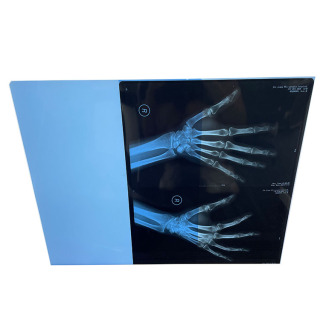
Beyond Diagnostics: Medical Thermal Film Finds Growing Role in Industrial Non-Destructive Testing
Our medical thermal film delivers exceptional clarity for diagnostic imaging, supported by advanced R&D and efficient production. Trusted through partnerships with leading hospitals, consistent sales growth and robust inventory ensure reliable, prompt global supply of this critical imaging film.
The versatile technology behind diagnostic imaging is finding new applications beyond traditional healthcare settings, with medical thermal dry image film increasingly adopted for industrial non-destructive testing. This cross-industry adoption leverages exceptional image quality originally developed for medical diagnostics, now serving critical quality assurance in aerospace, automotive, pipeline inspection, and advanced manufacturing. Engineers report the same imaging medium that produces clear radiographic images in hospitals delivers comparable performance for detecting structural flaws in industrial components. This technology transfer represents significant market expansion, with industrial applications projected to account for a growing share of consumption for this specialized product.
Industrial non-destructive testing traditionally relied on conventional radiographic films requiring chemical processing, presenting challenges including hazardous waste disposal and lengthy processing times. The shift toward dry processing technology addresses these limitations by eliminating chemical developers entirely. Quality assurance departments appreciate immediate image availability from medical thermal dry image film, enabling real-time inspection decisions that accelerate workflows. The high grayscale resolution proves valuable for detecting subtle discontinuities in critical components. Industrial users increasingly specify medical thermal dry image film for applications from aircraft engine inspection to pressure vessel weld verification.
Technical requirements for industrial testing closely parallel medical diagnostics in image quality demands. Both require exceptional spatial resolution, wide dynamic range, and permanent archival stability. The imaging technology developed for radiography delivers the same performance needed for detecting cracks and inclusions in manufactured components. Industrial laboratories report consistent performance across temperature variations typical of field environments. This consistency makes medical thermal dry image film the preferred choice for inspectors working from manufacturing floors to remote pipeline locations.
Aerospace adoption has accelerated as manufacturers seek testing solutions combining reliability with environmental responsibility. Aircraft component inspection demands the highest defect detection standards, where undetected flaws can have catastrophic consequences. The imaging technology delivers sensitivity required for inspecting turbine blades, landing gear, and structural airframe elements. Major aerospace manufacturers have qualified medical thermal dry image film for quality assurance programs, recognizing the medium's ability to meet stringent specifications. The dry processing nature also supports lean manufacturing by eliminating chemical waste streams.
Automotive manufacturing represents another growth area. High-volume production requires inspection methods balancing thoroughness with efficiency. Quality control engineers utilize medical thermal dry image film for inspecting cast engine blocks, transmission components, and safety-critical structural elements. Durability under handling conditions typical of busy manufacturing facilities has proven comparable to traditional films. Several major automotive manufacturers have incorporated medical thermal dry image film into quality protocols, citing both performance and environmental benefits.
Pipeline inspection and infrastructure monitoring increasingly rely on this technology for field-based testing. Inspectors examining oil and gas pipelines require portable solutions delivering immediate results. Compatibility with battery-powered portable dry imagers enables on-site inspection without darkrooms or chemical processing. Field inspectors report the imaging medium maintains quality even under challenging outdoor conditions. The permanent archival nature supports regulatory compliance for maintaining inspection records.
Advanced manufacturing sectors including additive manufacturing have emerged as new markets. Three-dimensional printed metal components require specialized inspection approaches, and high-resolution imaging capabilities meet these demanding requirements. Research institutions developing new processes utilize medical thermal dry image film to validate production methods. Adaptability to various imaging modalities makes the product suitable for diverse emerging technologies where quality assurance remains critical.
Economic considerations favor adoption in industrial applications, particularly for facilities transitioning from conventional wet-process films. Elimination of chemical processors, darkroom facilities, and hazardous waste disposal generates significant operational savings. Industrial users report comparable or superior image quality to traditional industrial films while reducing per-inspection costs. Pricing stability provides budgeting predictability for manufacturing quality departments. These advantages complement environmental benefits driving organizations toward this imaging solution.
Technical support infrastructure originally developed for medical imaging has proven adaptable to industrial needs. Manufacturers have expanded service capabilities to support industrial customers with specialized applications. Field engineers work with industrial clients to optimize imaging parameters for specific requirements. Global distribution networks ensure consistent availability across regions. This support gives industrial users confidence in adopting medical thermal dry image film for critical quality assurance.
Environmental sustainability advantages resonate with industrial organizations facing pressure to reduce hazardous waste. Traditional industrial radiographic films generate chemical waste requiring specialized disposal, while dry processing technology eliminates this burden entirely. Manufacturing facilities implementing sustainability initiatives highlight the transition in environmental reporting. These benefits align with broader industry trends toward greener manufacturing practices.
Market analysts project industrial segment will account for an increasing proportion of consumption as awareness spreads across manufacturing sectors. Current industrial applications represent a modest but rapidly growing share of overall volume. The diversity of applications, from aerospace to infrastructure inspection, provides market resilience. Manufacturers have responded by developing product variants optimized for specific industrial applications while maintaining core performance characteristics.
In conclusion, the growing role in industrial non-destructive testing demonstrates technology versatility beyond diagnostic origins. The same image quality, reliability, and environmental advantages that made medical thermal dry image film essential in healthcare now serve critical quality assurance across manufacturing sectors. As industrial users continue discovering benefits of dry processing and immediate image availability, adoption will likely accelerate. This cross-industry expansion validates the value proposition while providing industrial users with a superior solution for non-destructive testing requirements.